
Façades & Curtain Walls
High-Stakes Fenestration
Where the industry's most demanding projects take shape. A dedicated intelligence hub for commercial and hospitality fenestration — tracking the builds, the specs, and the standards that define the high-rise market.
"Commercial work is not just bigger glass. It is a different discipline — engineered, documented, and accountable to standards that residential never touches. The professionals who understand that difference are the ones who win the bid."
— Maurica Finley
Façade & Curtain Wall Intelligence
The Latest in Commercial Fenestration
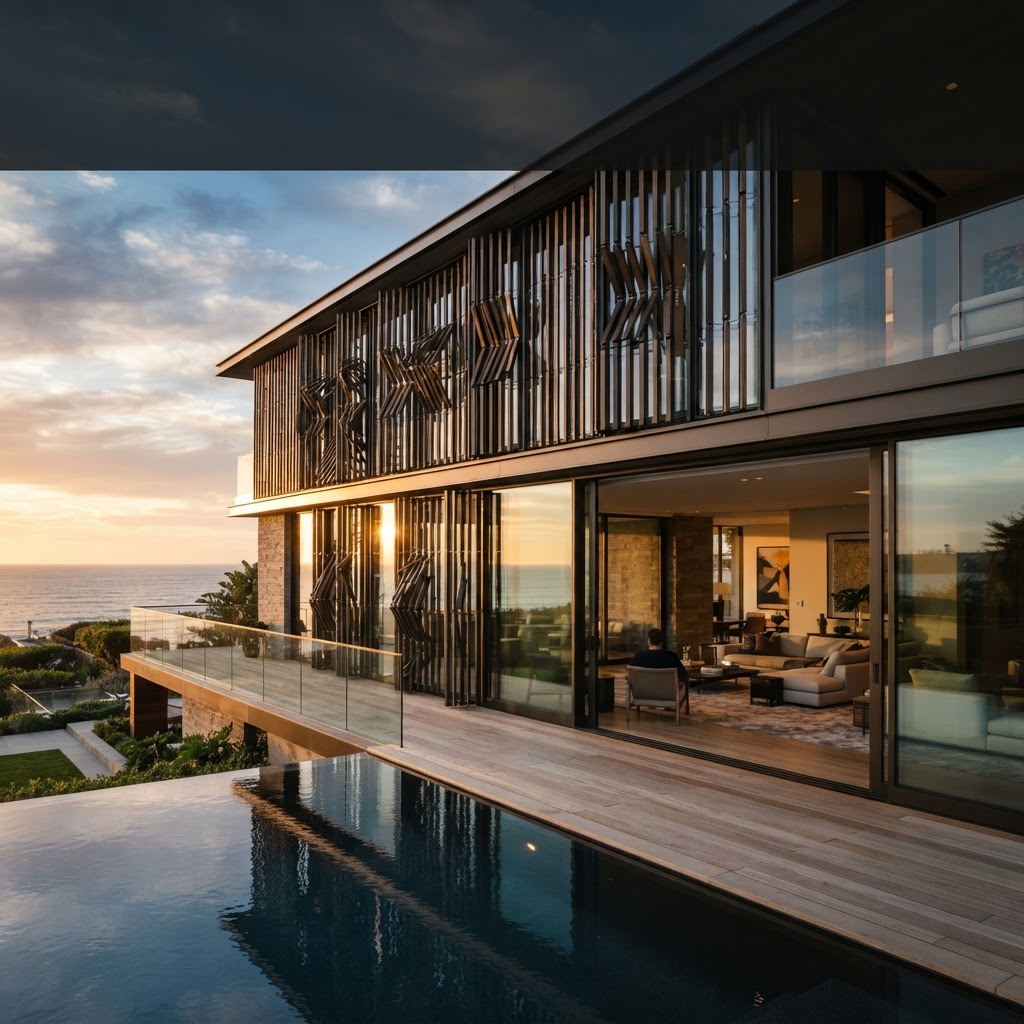
The Resurgence of Kinetic Facades: Redefining Luxury Fenestration in 2026
High-end residential projects are increasingly turning to kinetic glazing systems that respond dynamically to solar orientation and occupant behavior. As sustainability demands meet the desire for seamless indoor-outdoor living, manufacturers are pushing the boundaries of frame-to-glass ratios. This trend forces architects and fabricators to rethink structural support systems to accommodate moving elements without compromising thermal integrity.
Read MorePrefabricated Modular Glazing Packages Streamline Ultra-Luxury Builds
Top-tier construction firms are increasingly moving fenestration installation into factory-controlled off-site environments to combat field labor shortages and scheduling delays. By delivering complete wall units—including glazing, shading, and exterior cladding—builders are reducing site time by up to 30%. This shift necessitates a new level of precision in BIM coordination between the architect, the manufacturer, and the site superintendent.
Read More →Secondary Aluminum Adoption Hits All-Time High Amid Green Premiums
Luxury aluminum extrusion manufacturers are rapidly pivoting toward secondary (recycled) alloys to meet stringent carbon-neutral targets demanded by global specifiers. While the market initially feared a drop in structural consistency, advanced thermal mechanical processing has enabled high-performance profiles with a 70% lower carbon footprint. This shift is reshaping supply chain procurement strategies as 'Green Aluminum' commands a significant premium in the current market.
Read More →Self-Cleaning Coatings Enter the Ultra-Luxury Residential Market
Breakthroughs in hydrophilic photocatalytic coatings are finally enabling truly low-maintenance glazing for large-scale, high-rise luxury residential projects. By breaking down organic pollutants using natural UV light, these coatings maintain clarity without frequent manual cleaning. For owners of expansive glass facades in urban environments, this innovation significantly reduces long-term operational costs and preserves the architectural vision.
Read More →The Rise of the 'Glazing Systems Specialist': Elevating Installation Standards
As fenestration technology becomes more complex, the role of the general contractor in window installation is waning, replaced by specialized glazing systems installers. These professionals now act as technical consultants who understand building envelope physics, thermal bridging, and structural interface. This professionalization is helping to mitigate the industry’s long-standing issues with moisture infiltration and service callbacks.
Read More →Innovation Spotlight: The Rise of Connected, Intelligent Fenestration
The industry is witnessing a shift from passive architectural elements to active, responsive components that communicate with building management systems. Innovations in connected fenestration are enabling real-time adjustments to light and thermal transmission, significantly enhancing occupant comfort. This technological leap is setting a new standard for what constitutes a 'smart' building envelope in the modern era.
Read More →Aluminum Systems Evolve to Meet Rising Thermal Performance Standards
As building codes tighten globally, aluminum fenestration manufacturers are pivoting toward advanced thermal break technologies to maintain market relevance. The shift is driven by a need to balance the material's inherent structural strength with the aggressive energy efficiency requirements of modern net-zero projects. Industry experts note that high-performance aluminum remains a cornerstone for commercial glazing, provided it meets the latest sustainability benchmarks.
Read More →Adapting to Stricter Energy and Environmental Regulations
New building codes are placing unprecedented demands on the thermal performance of windows and doors, forcing manufacturers to innovate rapidly. Compliance is no longer just about meeting minimum U-values; it involves a holistic approach to building envelope performance. Firms that proactively invest in R&D to exceed these standards are positioning themselves as leaders in an increasingly regulated market.
Read More →The Rise of Smart Glass in Adaptive Building Envelopes
Smart glass technology is moving from a niche luxury to a standard requirement for energy-efficient, dynamic building facades. By automatically adjusting opacity in response to sunlight and temperature, these systems significantly reduce HVAC loads while enhancing occupant comfort. As costs stabilize, architects are increasingly specifying switchable glazing for both residential and commercial applications to achieve net-zero goals.
Read More →Aluminum Extrusion Trends: Meeting the Demand for Slimmer Sightlines
Aluminum remains the material of choice for high-end residential and commercial projects requiring narrow sightlines and high structural strength. Manufacturers are currently investing in tighter manufacturing tolerances and updated tooling to support the industry's push for larger, more modern glass openings. These advancements ensure that aluminum systems continue to meet rigorous performance standards while satisfying the aesthetic preferences of contemporary architects.
Read More →Global Glass Market Forecast: A $99 Billion Opportunity by 2031
The global building construction glass market is projected to reach nearly $100 billion by 2031, driven by a steady 4.7% CAGR. Growth is being fueled by strict environmental regulations and a global transition toward intelligent, connected fenestration solutions. North America and APAC remain key regions for expansion as demand for energy-efficient building envelopes continues to rise.
Read More →The Rise of Active Glazing: Smart Glass and Photovoltaic Integration
The architectural glass sector is undergoing a transformation as buildings shift toward dynamic, energy-efficient solutions. Smart glass technology, capable of adjusting tint and opacity based on environmental conditions, is becoming a standard requirement for high-performance projects. Furthermore, the integration of transparent photovoltaic cells into building facades is turning windows into active energy-harvesting components.
Read More →Global Architectural Glass Market Projected to Reach $99 Billion by 2031
The global building construction glass market is experiencing steady growth, with a projected compound annual growth rate of 4.7% through 2031. Driven by strict environmental regulations and a push for energy-efficient building envelopes, the industry is seeing a surge in demand for high-performance glazing. Innovations in transparent photovoltaic cells and smart glass are further positioning glass as a critical component in sustainable, active building design.
Read More →The Future of Fenestration: Navigating the Shift Toward Intelligent Building Envelopes
The fenestration sector is undergoing a fundamental transformation as windows evolve from passive architectural elements into active, responsive components of the modern home. Industry leaders are increasingly prioritizing connected, intelligent solutions that integrate seamlessly with smart home ecosystems to optimize thermal performance and natural light. As we move through 2026, the focus remains on balancing these high-tech advancements with the enduring demand for clean, expansive aesthetics that define luxury living.
Read More →The Rise of Biometric Integration in Luxury Door Hardware
Hardware manufacturers are shifting focus toward 'invisible' security, where biometric scanners and NFC readers are seamlessly embedded directly into door handles and mullions. This aesthetic-first approach solves the longstanding conflict between high-end industrial design and the bulky presence of traditional access control devices. As cybersecurity becomes a top priority for ultra-high-net-worth clients, installers must gain competency in configuring encrypted, low-voltage hardware systems.
Read More →Standards & Intelligence
Commercial Compliance & Innovation
The codes, standards, and technologies shaping commercial fenestration specifications today.
Bird-Safe Glass Mandates
Major U.S. cities (New York, Chicago, San Francisco) now require bird-deterrent glazing patterns on commercial facades above certain heights. Specifiers must source patterned or etched glass that meets local wildlife ordinances without sacrificing visible light transmission.
High-Rise Thermal & Wind Load
Tall commercial buildings demand engineered curtain wall systems rated for extreme wind loads, stack-effect pressure, and thermal movement. Thermally broken aluminum and unitized glazing are now baseline expectations on projects above 10 stories.
Safety & Security Glazing
Federal buildings, transit hubs, and landmark commercial towers increasingly require blast-resistant laminated glazing and forced-entry-rated systems. Specifiers must navigate ASTM, GSA, and DoD criteria alongside standard NFRC ratings.
Dynamic & Electrochromic Glass
Commercial office tenants are driving demand for smart glass that adapts to solar gain in real time. Electrochromic and dynamic-tinting systems are moving from novelty to specification on Class-A office and hospitality projects.
 Translate