
Puerto Rico's $4B Real Estate & Hospitality Industry
Capital Inflow, Building Envelope Demands & Community Friction
Puerto Rico is undergoing one of the most transformative real estate and hospitality cycles in its history. Fueled by tax incentives, post-disaster federal investment, and global capital, the island's development pipeline has surged into the $3.5B to $4.0B+ range.
From ultra-luxury mega-resorts on the west coast to boutique adaptive-reuse projects in historic Old San Juan, capital is reshaping the island's landscape. However, this rapid influx is also igniting significant debate around environmental impact, infrastructure capacity, and local affordability.
Here is a breakdown of what is driving this wave, where the capital is flowing, and what it means for high-performance building industries like fenestration.
The Core Financial & Policy Drivers
Three Levers Accelerating Development
Three main levers are accelerating development across the island:
Act 60 — Incentives Code
Consolidates former tax programs (like Acts 20 & 22) to offer up to 100% exemptions on capital gains and reduced corporate tax rates for qualifying investors, driving high-net-worth real estate acquisition.
Law 182
Provides up to 40% tax credits for eligible urban center redevelopment projects, encouraging adaptive reuse of historic structures.
Tourism Tax Credits & Federal Relief
Substantial capital injections aimed at upgrading regional infrastructure and expanding hotel inventories across the territory.
Major Pipeline Highlights
Where the Capital Is Flowing
Mega-Resorts & Master-Planned Communities
Esencia — Cabo Rojo · ~$2.0B
A 2,000-acre project on the southwest coast featuring luxury hospitality brands (Mandarin Oriental, Rosewood), ~1,200 private residences, two golf courses, an equestrian center, private schooling, and a medical facility. To overcome local infrastructure limits, plans include an independent microgrid and water treatment facilities.
Moncayo — Fajardo · $500M–$750M
A 1,100-acre community featuring a 68-suite Auberge Resorts Collection property and luxury branded villas.
Commercial & Gaming Expansion
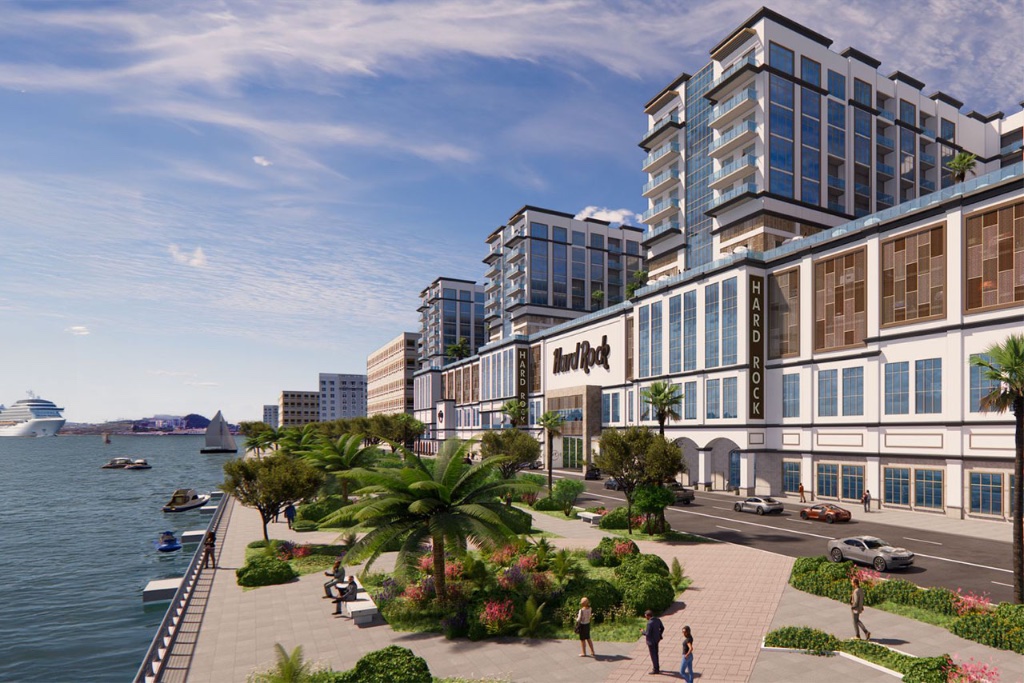
Hard Rock Hotel & Casino — San Juan · $850M
A major destination development featuring 415 rooms, 186 branded residences, and gaming facilities near Old San Juan.
Four Seasons Resort & Residences — Bahía Beach
High-end residential expansion situated within a 483-acre nature reserve in Río Grande.
Urban Core & Adaptive Reuse
Palacio Arzobispal & Seminario — Old San Juan
Acquired by Propiedades Ceiba LLC for ~$8M to convert the historic 18th-century Archbishop's Palace into boutique commercial/hospitality space.
Palacio Provincial — Old San Juan
A fully operational Curio Collection by Hilton property located inside the renovated 19th-century former Department of State building.
What This Wave Means for Fenestration & Glazing
A High-Margin, Specialized Opportunity
Because Puerto Rico combines Category 5 hurricane threats, aggressive tropical coastal salt spray, and high design standards, developers cannot rely on standard off-the-shelf window and door systems. This $4B pipeline represents a high-margin, specialized opportunity for manufacturers, fabricators, and glazing contractors.
Extreme Impact & Pressure Ratings
Projects face direct coastal exposure, requiring glazing engineered for High-Velocity Hurricane Zones (HVHZ), ASTM E1886/E1996 compliance (Large Missile Impact), and high Design Pressure (DP) ratings (170+ mph winds).
Thermal & Environmental Performance
To manage heavy HVAC loads, building envelopes require low Solar Heat Gain Coefficient (SHGC) glass, combined with Kynar coatings, high-grade anodized aluminum, and 316 marine-grade stainless steel to prevent salt-air corrosion.
Modern Luxury vs. Historic Adaptive Reuse
Demand is split across two architectural extremes — frameless contemporary resort glazing on one side, and heritage-compliant slimline systems for Old San Juan's protected facades on the other.
The Social Reality
Infrastructure & Community Friction
While developers and state agencies highlight job creation and economic growth, local community response is marked by growing friction. Key points of friction include:
Environmental Stewardship
Grassroots coalitions (such as Defiende Cabo Rojo and local ecological institutes) argue that mega-developments jeopardize coastal wetlands, mangroves, and critical wildlife habitats.
Public Access
Although beach access is protected under local law, residents express concern over gated resort footprints indirectly restricting access roads and coastal entry points.
Housing & Disparity
Critics argue that tax relief granted to non-resident buyers accelerates price inflation in neighboring communities, pricing out local residents without yielding proportional local tax revenues.
The Takeaway
For Developers & Industry Leaders
Puerto Rico's hospitality boom presents undeniable yield potential, but long-term success requires navigating more than just balance sheets and municipal permits.
For projects to endure, developers and supply-chain partners must prioritize resilient building standards, genuine community engagement, and environmental stewardship that respects the surrounding ecosystem as much as the development itself.
Maurica Finley
Principal / Owner — Global / European Business Development Partner · ICAA · Proverbs 11:3
 Translate